Styling: Arrange Without the Clutter
Everything inside the rectangle either supports your makeup work or steals attention from it. By simplifying necklines, choosing low-chroma matte backdrops, and replacing commercial product packaging with tactile material studies, your portfolio feels timeless rather than tied to a single retail season.
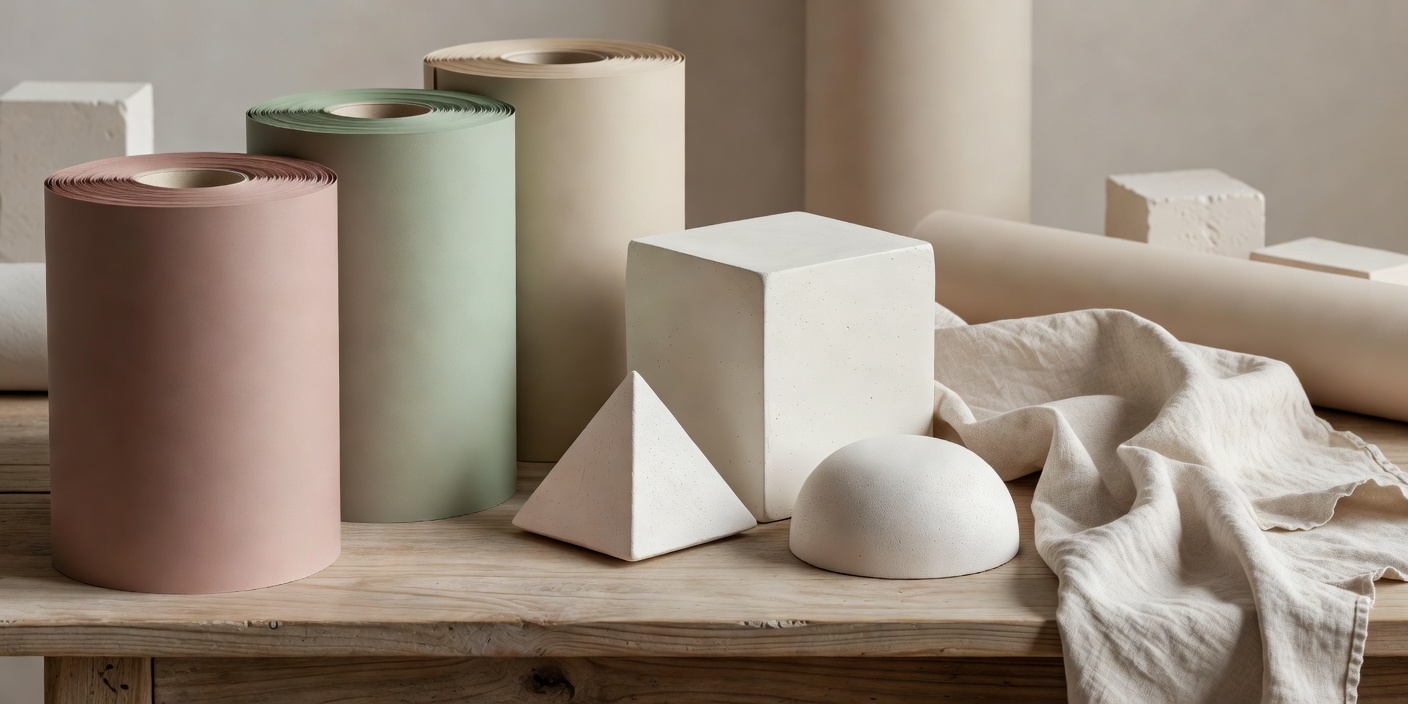
Choosing Backdrops That Respect Skin Undertones
because of simultaneous contrast, the human brain judges a skin tone partly by the colour surrounding the head. Place a model with fair olive skin in front of a bright lilac or lime paper roll, and the complexion immediately shifts toward sallow grey or magenta. Worse, brightly coloured walls bounce tinted light back onto the shadow side of the neck and jaw.
Build your studio around non-reflective, heavy-weight seamless paper (such as 1.35 m width rolls for tight beauty spaces) or painted canvas flats in low-saturation earth and stone neutrals.
-
Warm Bone & Unbleached Parchment
Ideal for fresh editorial skin, bridal portfolios, and sunlit bronzed looks. When lit directly to match the key light exposure, it reads as soft cream; when left unlit 1.6 metres behind the subject, it drops smoothly to a warm putty tone that frames dark and light hair equally well.
-
Mid-Tone Weatherstone Grey
The most versatile single roll for a working makeup artist. Because it sits near 18% reflectance, you can turn a single background roll into five distinct tones simply by changing the distance between your main light, your model, and the paper.
-
Deep Umber & Matte Espresso
Superior to jet black when photographing deep complexions or metallic evening eye work. Pure black sometimes merges with dark hair unless you add a dedicated rim light, whereas deep umber retains a subtle warm separation around the crown and shoulders.
Composing Product-Free Flat Lays
Why leave plastic lipstick tubes, scratched compacts, and brand logos out of your portfolio flat lays? Art directors and private clients want to evaluate your eye for colour harmony, finish, and mood—not read barcode labels or discontinued packaging.
The Material Palette: Cloth, Paper, Stone, and Pigment
Keep a shallow crate under your workbench stocked with non-branded tactile surfaces that echo cosmetic finishes:
-
For Matte & Velvet Looks: 300 gsm cotton rag paper with hand-torn edges, unglazed terracotta tiles, and chalky plaster cubes.
-
For Satin & Natural Skin: Washed oatmeal linen draped in loose folds, honed travertine coasters, and brushed aluminium palette knives.
-
For Gloss & Editorial Chrome: Clear acrylic blocks, rippled glass sheets over neutral paper, and direct sweeps of lip lacquer or cream pigment across a clean ceramic tile.
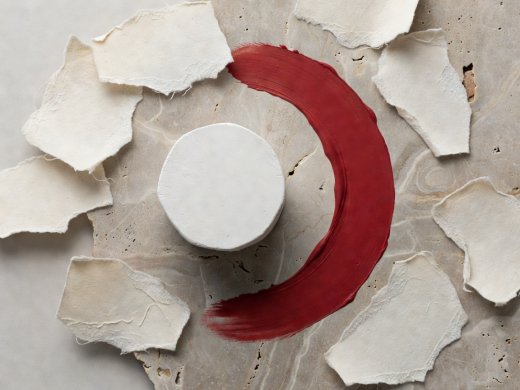
Low-Angle Raking Light for Texture: Unlike portraits where the light sits above the face, position your softbox low and to one side (15 to 25 degrees above the table surface) when shooting a flat lay. That grazing angle casts delicate micro-shadows across paper grain and pigment ridges.
Neckline, Hairline, and Jewellery Discipline
-
Clear the Collarbone or Use Matte Tube Tops
Hoodie drawstrings, neon bra straps, and high ribbed crewnecks slice the neck visually and reflect colour upward onto the chin. Ask models to bring a simple bandeau top, or wrap a length of wide raw-edge muslin or matte black jersey neatly across the chest line so the collarbone skin matches the facial finish.
-
Remove Reflective Studs and Nose Rings Unless Intentional
Tiny polished silver or gold studs catch studio strobes as bright white pinpricks that pull the viewer's eye away from the cheek contour. Unless jewellery is a deliberate part of an editorial concept, remove ear studs before shooting and check for fresh clasp marks on the neck.
-
Tame Flyaways Against Backlit Edges
Keep a clean spoolie misted lightly with flexible hold spray or a tiny drop of squalane on the workbench to press down single backlit crown hairs that otherwise require twenty minutes of cloning in post-production.